Hollow-point ammunition: why the bullet designs differ
Two boxes can both say “JHP” and still contain very different bullets. Hollow point describes a cavity at the nose; it does not tell you how the jacket, core, or tip was made, or how the load was tested. That is why I look beyond the label when comparing defensive ammunition.
Start with the bullet, not the marketing line
A conventional jacketed hollow point has a lead core and a metal jacket with an opening at the front. That opening is intended to help the bullet expand under appropriate conditions. But cavity shape, jacket thickness, scoring, and velocity all affect the result. A 9mm 115-grain JHP from one product line should not be treated as the same thing as a 147-grain JHP from another.
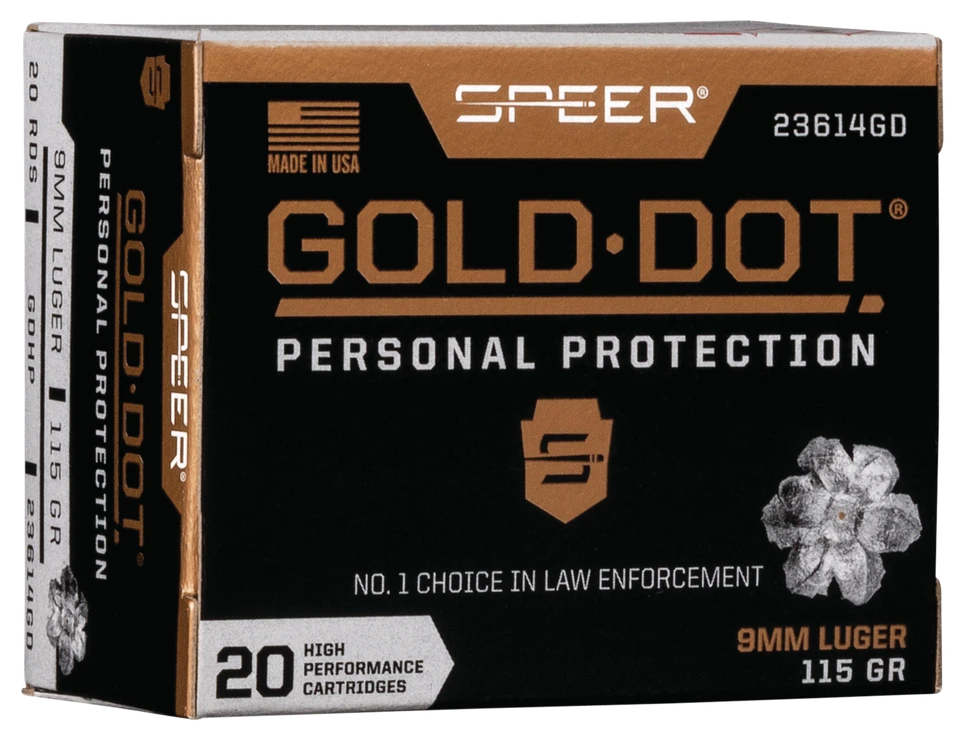
Some designs bond the jacket to the core to help keep the pieces together through certain barriers. Speer's Gold Dot is a well-known bonded example. Other bullets use a solid copper or copper-alloy construction rather than a separate lead core and jacket. Barnes' TAC-XPD is an example of an all-copper hollow point. Neither word on its own—bonded or copper—proves that a load is best for your firearm or situation. It tells you how the bullet was built.
A tip in the cavity is a design choice
Hornady's Critical Defense uses its FTX bullet, which places a flexible insert in the hollow-point cavity. Hornady explains that Critical Defense and Critical Duty are designed around different priorities, including different barrier expectations. That distinction is a good reminder not to assume two lines from the same maker perform alike just because their boxes look related.
Manufacturers publish gel and barrier results for some loads. Those results are useful when the exact caliber, bullet weight, and test conditions are named. A photo of one expanded bullet without the test conditions is much less useful. Barrel length also matters: a compact handgun can produce a different velocity than a manufacturer's test barrel, and some product lines are specifically developed for shorter barrels.
What to compare on the box
First match the exact cartridge designation to your firearm. Then compare bullet weight, bullet construction, standard or +P pressure marking, listed velocity, and package count. If two loads look close, check the manufacturer's page for the specific SKU or part number. Do not use pressure-rated ammunition beyond what your firearm maker permits. For a new load, confirm that it feeds and functions reliably in your own firearm at an appropriate range.
Price matters, but it belongs at the end of that comparison. A less expensive box may be a sensible practice load; a different projectile line may be selected for another role. The useful question is what the exact load is designed to do and whether its documented specifications fit the use you have in mind. Browse current 9mm Luger and other handgun ammunition listings with that in mind.
Four actual 9mm loads, side by side
The table below uses the exact factory part numbers, not generic '9mm hollow point' figures. Speer reports its three Gold Dot loads from a 4-inch test barrel; Barnes also reports a 4-inch barrel for its 32005 load. These are published muzzle measurements, not promises for a customer's handgun. The Barnes projectile is a solid-copper XPB; the Speer bullets are bonded Gold Dot hollow points. The +P row is a different pressure class and should only be considered for a firearm rated for it.
Notice the practical tradeoff: Speer's 115-grain 23614GD is listed faster than its 124-grain 23618GD, while the 124-grain +P 23617GD is faster and carries more listed muzzle energy than either standard-pressure Gold Dot row. Those numbers do not tell you which load will feed best, where it will hit in your handgun, or how it will perform through a particular barrier. They give you a precise starting point for comparing the right products.
| Exact load | Weight | Projectile | Muzzle FPS | Muzzle ft-lb | Source |
|---|---|---|---|---|---|
| Speer Gold Dot 23614GD | 115 gr | Bonded hollow point | 1,210 | 374 | Factory table |
| Speer Gold Dot 23618GD | 124 gr | Bonded hollow point | 1,150 | 364 | Factory table |
| Speer Gold Dot +P 23617GD | 124 gr | Bonded hollow point, +P | 1,220 | 410 | Factory table |
| Barnes VOR-TX 32005 | 115 gr | Solid-copper XPB | 1,125 | 323 | Factory table |
Published factory values. Actual velocity varies with firearm and conditions. +P is a separate pressure class.
What a velocity table cannot tell you
A muzzle-energy number is a calculation based on bullet weight and speed; it is not an expansion rating or a stopping-power guarantee. Bullet construction and actual impact conditions matter. A load tested from a shorter barrel can arrive at a different speed, and manufacturers may publish penetration or barrier tests under separate protocols. Look for the exact SKU, barrel length and test method before comparing those results.
For a customer choosing practice ammunition, the better buy may be a lower-cost FMJ with the same cartridge designation that the range allows. For a customer comparing defensive JHP loads, reliable feeding and an exact manufacturer-supported design matter more than chasing the highest FPS alone. If you shoot a compact pistol, check whether the manufacturer offers a short-barrel-specific load and test the exact ammunition in that firearm under appropriate supervision.
Products mentioned and related picks
Current in-stock listings. Check each product page for the exact load, package and availability.
 Speer Ammunition Speer Gold Dot, Personal Protection, 9mm, 115 Grain, Hollow Point, 23614GD9mm LugerView product →
 Speer Ammunition Speer Gold Dot, Personal Protection, 9mm, 124 Grain, Hollow Point, 23618GD9mm LugerView product →
 Speer Ammunition Speer Gold Dot, Personal Protection, 9mm, 124 Grain, Hollow Point, +P, 23617GD9mm LugerView product →
 Barnes VOR-TX, 9mm, 115 Grain, XPB, Hollow Point, 320059mm LugerView product →
 Underwood 45 ACP 230gr JHP.45 ACPView product →
 10mm Auto 155 Grain XTP Jacketed Hollow Point Ammo10mm AutoView product →
 380 ACP +P 90 Grain XTP Jacketed Hollow Point.380 ACPView product →
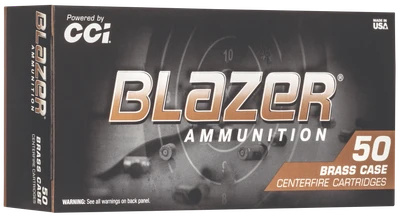 40 S&W 180gr Blazer Brass JHP.40 S&WView product →
 38 Special +P 125 Grain Jacketed Hollow Point Ammo.38 SpecialView product →
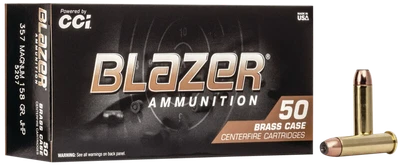 Blazer Ammunition Blazer Brass, 357MAG, 158 Grain, Jacketed Hollow Point, 5207.357 MagnumView product →
Keep reading
- Your first range day: what to bring and what to expect
- Indoor vs. outdoor ranges: how to prepare for each
- How to read an ammunition box: grain, FPS, energy, and more
- Range safety: the habits that matter every visit
- 9mm bullet weights: 115, 124 and 147 grain explained
- .22 LR velocity: standard, high velocity and quiet loads
- How to read a shotgun shell box before you buy
- FMJ vs. JHP ammunition: choosing for the job
- Hunting vs. target rifle ammunition: what changes?
- Shotgun shot sizes and gauges: what fits the hunt or the range