
How to read a shotgun shell box before you buy
Shotgun boxes can look crowded: 12 or 20 gauge, 2¾ or 3 inches, #7.5 or #8 shot, 1 ounce, 1,200 FPS. Each number answers a different question. Reading them in the right order helps you avoid buying the wrong shell for your shotgun or your range.
Gauge and chamber length come first
Match the gauge to the shotgun's marking and manual. Then check the shell length against the chamber length the firearm is designed to accept. Shell length on a shotshell box refers to the fired shell's nominal length, not necessarily the measurement of the unfired shell in your hand. Do not guess based on what seems to fit; the firearm maker's instructions govern compatibility.
A 20-gauge shell is not a substitute for a 12-gauge shell. Treat different gauges as separate products and keep them separated at the range. If you share a bench with people shooting different gauges, label each box and ask the range officer about its loading and handling rules.
What #7.5 and #8 actually describe
Numbered birdshot sizes describe pellet diameter, not the number of pellets in the shell. Winchester's shotshell guide lists lead #7.5 at about .095 inch and #8 at about .090 inch diameter. Smaller numbers generally mean larger pellets within that numbered series. That small dimensional difference is one reason clay shooters compare patterns and target breaks rather than picking a load from the number alone.
#7.5 and #8 are common conversations around clay and target ammunition, but the right choice depends on the discipline, the facility and its rules. Steel, lead and bismuth are different pellet materials, and certain hunting areas restrict lead shot. Do not infer material from shot size. Read the full box and the rules for the place you will shoot.
Payload and velocity are separate
The 1-ounce or 1⅛-ounce figure is the mass of the shot payload, not the weight of one pellet. FPS is a listed muzzle velocity from a test setup. Two shells can have the same shot size and different payloads or speeds. The feel of recoil also depends on the shotgun and fit, so a single box number does not predict every shooter's experience.
For a new clay shooter, a conventional target load that fits the gun and range is usually a simpler starting point than a specialty hunting shell. A high-volume competitor may care about repeatable pattern and feel across many boxes. A waterfowl hunter has to consider non-toxic-shot requirements and a different use case altogether. These are reasons to read the intended-use line on the package, not just the gauge.
Buckshot, slugs and case counts
Buckshot and slugs are different projectile categories from fine target birdshot. Buckshot sizes such as 00 are not read as '#8' shot, and a slug is one projectile rather than a cloud of pellets. Check firearm and range rules carefully before using either. Also verify the count being sold: 25 target shells in a box and 250 in a case are common examples, but the actual manufacturer SKU and listing determine what you receive.
When comparing online listings, use the part number to confirm gauge, shell length, payload, shot size and package count together. A near-identical name can conceal a different load or a different case quantity. Our shotgun ammunition pages should be read the same way: use the exact product details, and ask if a field is missing.
A concrete clay-target example
Imagine two 12-gauge target boxes that both say 2¾ inch and #8 shot. One may contain a lighter payload at a different listed velocity than the other. They can feel different in the same shotgun even though the gauge, length and shot size match. A new shooter may prefer a conventional, range-approved target load with manageable recoil; a competitor may care more about the exact pattern and consistency they have already tested. Read all of the box fields, then pattern the load at the distance your sport uses.
For a 20-gauge shooter, the same principle applies but the gauge must stay 20. Do not use a 12-gauge recommendation as a stand-in. Different clay games and facilities have different target presentations and rules, so ask what is allowed and useful before buying a case. The product cards below link to exact shell listings; confirm the part number and count on each page.
How to keep bulk orders straight
Shotgun ammunition is commonly sold as individual boxes and manufacturer cases. A listing for 250 shells should clearly be a verified case configuration, not a 25-round box with a guessed multiplier. When comparing case prices, check how many boxes are inside and whether all are the same load. Record gauge, length, payload, shot size, listed FPS and manufacturer part number together. If any one of those differs, you may be comparing two different products.
Products mentioned and related picks
Current in-stock listings. Check each product page for the exact load, package and availability.
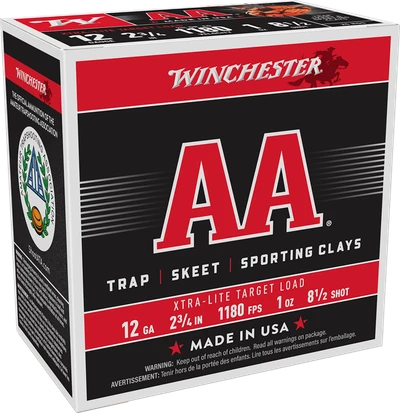 AA 12ga 23/4DR 1 oz #8.5 1180 fps12 GaugeView product →
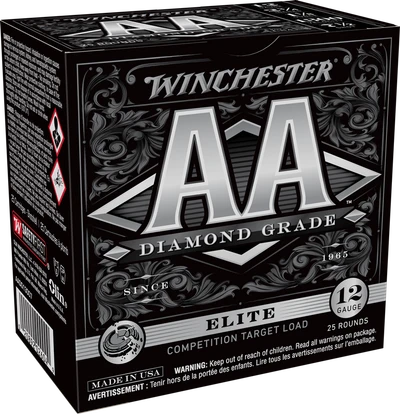 AA 12ga Diamond Grade 2 3/4" 1 1/8oz #7.5 1300 fps12 GaugeView product →
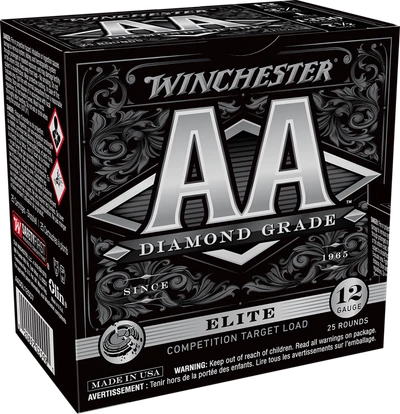 AA 12ga Diamond Grade 2 3/4" 1oz #7.5 1250 fps12 GaugeView product →
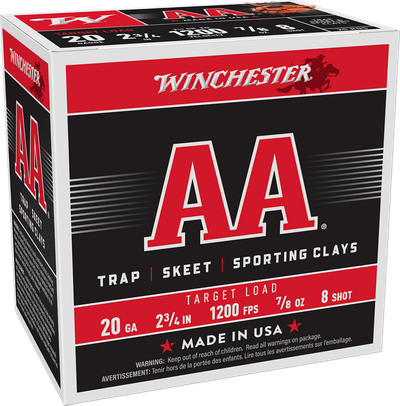 AA 20ga 21/2DR 7/8 oz #8 1200 fps20 GaugeView product →
 AA 410 2 1/2 1/2 oz #7.5 1300 fps.410 BoreView product →
 AA12GA 23/4DR 11/8 oz #7.5 1145 fps12 GaugeView product →
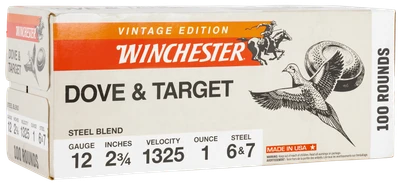 Dove & Target 12ga 2-3/4" 1325 fps 1 oz 6 & 7 Steel Shot Blend12 GaugeView product →
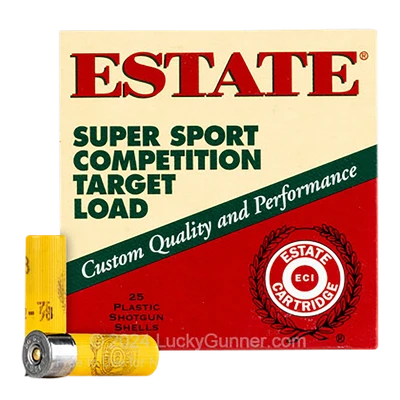 Estate 7/8 oz Ss Target Loads 20ga 2-3/4IN 2-1/2DE 7/8 oz 8 Ammo20 GaugeView product →
Keep reading
- Your first range day: what to bring and what to expect
- Indoor vs. outdoor ranges: how to prepare for each
- Hollow-point ammunition: why the bullet designs differ
- How to read an ammunition box: grain, FPS, energy, and more
- Range safety: the habits that matter every visit
- 9mm bullet weights: 115, 124 and 147 grain explained
- .22 LR velocity: standard, high velocity and quiet loads
- FMJ vs. JHP ammunition: choosing for the job
- Hunting vs. target rifle ammunition: what changes?
- Shotgun shot sizes and gauges: what fits the hunt or the range